
HOW TO MAKE PURPLE PAINT: CLEAN MIXES FOR ACRYLIC, WATERCOLOR AND OIL
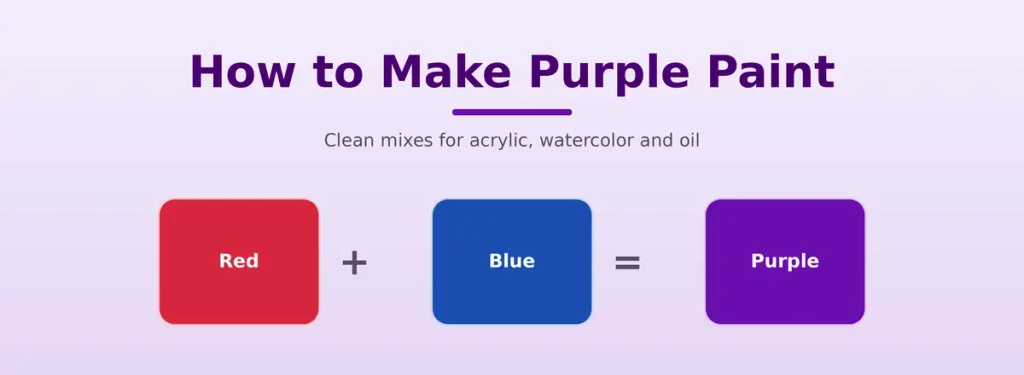
QUICK ANSWER: To make purple paint, mix a blue-biased red such as quinacridone magenta with a red-biased blue such as ultramarine, starting at roughly one part each and adjusting as you go. More blue moves the mix toward violet, more red toward plum. Quinacridone magenta and ultramarine can give a clean purple in acrylic, watercolor, and oil, though transparency, pigment strength, texture, and drying vary between them.
If your purple paint keeps turning out brown, grey, or dull, you are not doing anything wrong, you are almost certainly using the wrong red and blue. This is the most common frustration in color mixing, and it burns through expensive paint fast. The fix is not more paint, it is the right two pigments and a starting ratio you can trust.
This guide gives you both. You get the exact pigments to buy, a simple ratio to start from, and the step-by-step method, so you can mix a clean, strong purple on the first or second try, whether you paint in acrylic, watercolor, or oil.
What Two Paints Make Purple?
Red and blue paint make purple, but the cleanest result comes from a blue-biased red and a red-biased blue. Quinacridone magenta sits toward the magenta side of the color wheel, which makes it better for a clean purple than an orange-leaning red. Ultramarine leans toward red, so it pushes the mix toward violet rather than gray. Together they can produce a clean, strong purple across many common artist paints.
Materials You Need
- Core reds and blue: quinacridone magenta (PR122) and ultramarine blue (PB29)
- An optional alternative red: alizarin crimson (PR83), which mixes rich purples but can have poor lightfastness, so check the manufacturer rating or use a permanent alizarin alternative
- For acrylic and oil: titanium white (PW6) to lighten and a black or a deep violet to darken
- For watercolor: water and the white of the paper to lighten, rather than white paint
- A clean palette, a palette knife or brush, and the right surface for your paint
Best Pigments for Purple Paint
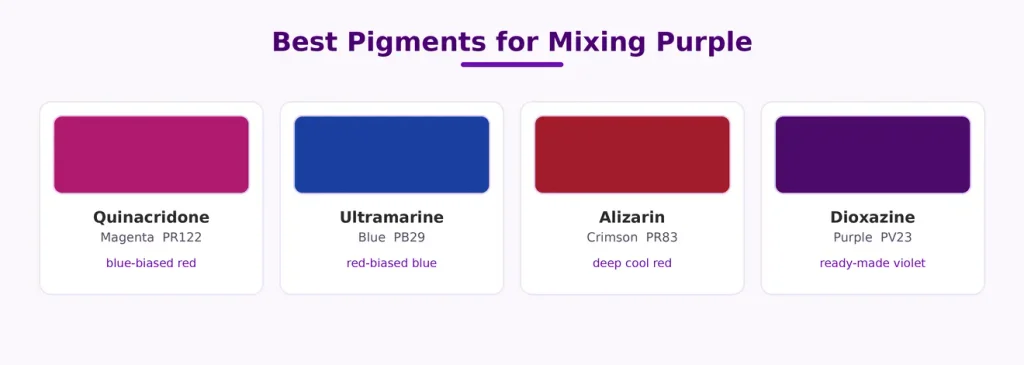
The table below shows which pigments give a clean purple and which to leave out. Check the pigment code printed on the tube rather than the color name alone, since PR122 identifies quinacridone magenta, but pigment load, binder, and transparency can still vary across brands and grades.
| Role | Paint | Code | Note |
| Recommended red | Quinacridone Magenta | PR122 | Strong, blue-biased mixing red |
| Alternative red | Alizarin Crimson | PR83 | Rich mixture, check lightfastness |
| Recommended blue | Ultramarine Blue | PB29 | Red-biased blue, may granulate in watercolor |
| Ready-made violet | Dioxazine Purple | PV23 | Deep and highly tinting, use sparingly |
| Less suitable red | Cadmium Red | Often PR108 | Usually gives a duller purple |
Check the manufacturer data or a pigment reference such as the handprint pigment guide.
NOTE: Mixing tip. If your purple keeps turning brown, the usual cause is an orange-leaning red like many cadmium reds. Switch to a magenta-based red and the problem usually clears on its own.
How to Mix Purple Paint Step by Step
- Place a small amount of your red on the palette, since you can add more but cannot take color out.
- Add the blue gradually, roughly one part blue to one part red, and use far less if your blue is a strong tinter like phthalo.
- Blend the two fully before you judge the color, because a half-mixed puddle reads unevenly.
- Adjust the balance, moving toward more blue for a cooler violet or more red for a warmer plum.
- Lighten with white or deepen with a small touch of black only once the base purple looks right.
NOTE: Note on phthalo blue. Phthalo is far stronger than ultramarine, so it needs a much smaller amount, and its green-leaning versions can give a less violet mix. Test the undertone first if you use it, and do not treat it as a one to one swap for ultramarine.
Purple Paint Mixing Ratios
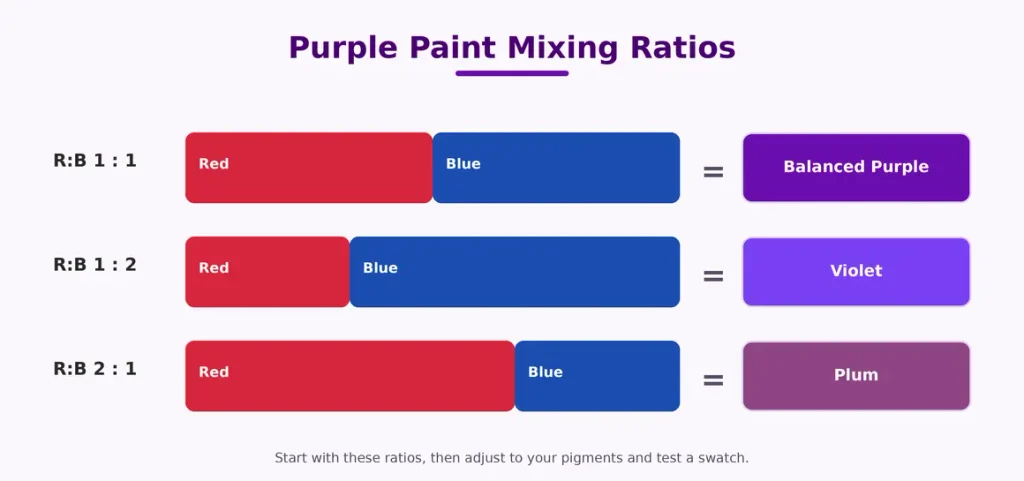
These are visual starting ratios for quinacridone magenta (PR122) and ultramarine (PB29), not universal formulas. Measure equal volumes or consistent brush loads, and test each mixture, since pigment strength varies by brand and medium.
| Target result | Magenta | Ultramarine | Adjustment |
| Balanced purple | 1 part | 1 part | Adjust after mixing |
| Blue-violet | 1 part | 2 part | Add blue gradually |
| Red-purple | 2 part | 1 part | Add magenta gradually |
How to Make Purple With Acrylic Paint
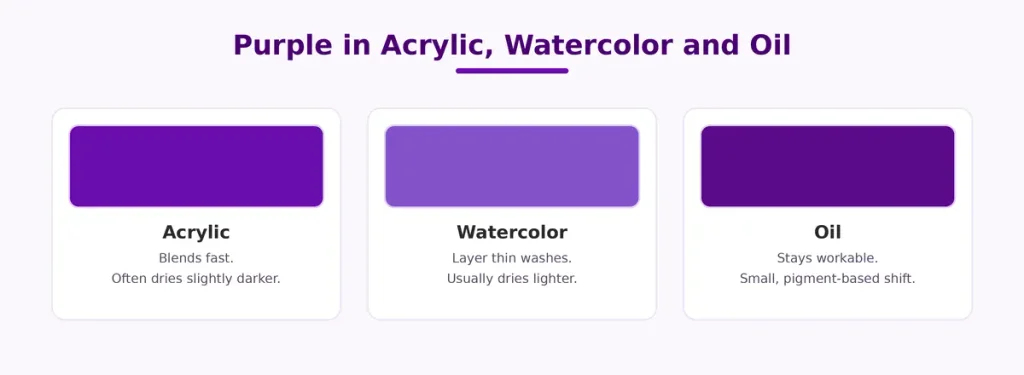
Acrylic blends cleanly and sets quickly, and it may show a wet-to-dry color shift, often looking slightly darker or less milky once the binder clears. Mix a little more than you think you need, and let a small test swatch dry before you commit, since matching a dried acrylic purple later is difficult. The shift varies by paint line, so test the actual brand.
How to Make Purple With Watercolor
Watercolor purple can be mixed on the palette for an even color, or glazed as thin washes of one pigment over the other for optical depth. Ultramarine (PB29) often granulates and settles into the paper texture, while quinacridone magenta (PR122) stains more smoothly and strongly. Lighten with water and the white of the paper rather than white paint, and judge the strength from a dried test, since watercolor usually dries lighter.
How to Make Purple With Oil Paint
Oil paint stays workable far longer, which lets you blend a smooth, even purple. Mix the ratio with a palette knife for consistency, and hold off on white until the base purple is right, since white added too early flattens the color. Its shift on drying is comparatively small and depends on the pigments, so consider how transparent your magenta and blue are before glazing.
How to Make Purple With Poster or Tempera Paint
Ready-mixed school tempera and poster colors can be blended directly on a palette, but their opacity and binder differ from acrylic, so they are not identical. Use small amounts, check the product label, and avoid adding so much water that the paint loses coverage or adhesion. A magenta-leaning red with a red-biased blue still gives the cleanest purple.
Making Lighter and Darker Purple Paint
To lighten purple, add white a little at a time for a soft tint toward lavender. To deepen it, add ultramarine when you want a darker, bluer purple, or a small amount of dioxazine purple when you want more depth without rebuilding the mix from red and blue. Black gives a more neutral, less saturated dark. For the full range of shades, see the shades of purple guide.
Why Your Purple Paint Looks Muddy
Purple can look muddy for several reasons. The starting colors may lean away from violet, a complementary color may have entered the mix, or the brush and palette may still hold leftover pigment. Multi-pigment paints and black added too early dull it as well. Start with a blue-biased red and a clean blue, keep your tools clean, and add black last. For the full set of causes and fixes, read why your purple paint looks brown.
Frequently Asked Questions About Purple Paint
Getting a Clean Purple
A clean purple paint comes down to pigment choice, so start with a blue-biased red and a red-biased blue and mix small. From that base you can push toward violet or plum, lighten toward lavender, or deepen toward a rich dark purple. Test a swatch, let it dry, and adjust under the light where the finished work will be seen.
NOTE: Written and reviewed by Zohan, founder and editor of How to Make Purple. This guide was researched using manufacturer pigment information and established color references. Mixing results vary by formulation, brand, surface, and lighting.
Last reviewed: October 15, 2026.